The World Is Healing: How the FIFA World Cup Is Bringing Humanity Together
For years, it has felt like every headline reminded us how divided we had become.
Politics divided us.
Religion divided us.
Race divided us.
Countries divided us.
Even neighbors seemed to forget how to simply enjoy being around one another.

Then, almost unexpectedly, something beautiful happened.
The FIFA World Cup arrived.

Yes, there are winners and losers on the field. There always will be. But if you’ve spent any time walking through the host cities or scrolling through videos online, you’ve probably noticed something much bigger than the matches themselves. The world is smiling again.
One sentence I saw online has stayed with me ever since:
“The world is healing.”

That may sound dramatic, but it’s difficult to watch what’s happening across America and not feel that way.

In Boston, thousands of Scottish supporters surrounded a police officer after he casually joined their game of keepy-ups. Instead of creating tension, the officer became part of the celebration, and hundreds of fans erupted in cheers. It was a simple moment that reminded everyone that sometimes all it takes is a soccer ball to erase the distance between strangers. (Al Jazeera)

Every day, another story appears.
Spain and Cape Verde supporters exchanging jerseys after ninety hard-fought minutes.
England supporters filling the streets before heading to a Texas rodeo.

Mexican supporters celebrating together in El Paso, embracing local traditions as much as their own.

Brazilian fans transforming Times Square into something that looks remarkably like Carnival, with music, dancing, and endless yellow jerseys.
England and Denmark supporters parking side by side, grilling together, laughing together, and watching matches as though they had known each other for years.

The legendary Scottish Tartan Army marching through American cities, filling baseball stadiums, breweries, and downtown streets with music that even people who knew nothing about soccer couldn’t help but enjoy. (Reuters)
Perhaps the most beautiful part of this tournament isn’t what’s happening inside the stadiums.
It’s what’s happening outside them.
Restaurants are full.
Small businesses are thriving.
People are trying foods they’ve never tasted before.
They’re dancing to music they’ve never heard.
They’re learning about countries they couldn’t have found on a map just a month ago.
For Cape Verde, this has been especially meaningful.
Millions of people around the world have now discovered a nation many had never heard of before. They have watched our players compete with courage against football giants. They’ve searched where Cape Verde is. They’ve begun planning vacations. Some members of our own diaspora are talking about investing back home, creating businesses, supporting local communities, and helping build opportunities for future generations.

That may become one of this World Cup’s greatest legacies.
Not simply goals.
Not trophies.
But curiosity.
Connection.
Opportunity.
One of the greatest surprises has been seeing supporters celebrate together regardless of the final score.
Teams lose, yet their fans continue singing.
Opposing supporters share meals after the match.

Families wearing different jerseys pose for pictures together.
Children ask to trade scarves and flags.
The result lasts ninety minutes.
The friendships often last much longer.
Here in the United States, this tournament has offered something many people didn’t realize they needed.
For a few weeks, millions have stepped away from constant arguments and endless division.
No one is asking whether you’re Republican or Democrat.
Nobody cares what color your skin is.
Nobody asks what religion you practice.
For one afternoon, you’re simply another football fan sharing a table, singing a song, celebrating a goal, or consoling someone after a heartbreaking loss.

Maybe that’s who we’ve always been underneath everything else.
Human beings don’t need as much as we sometimes think.
We need food.
We need clean water.
We need people who care about us.
We need purpose.
We need something to celebrate together.
The World Cup has reminded us of something easy to forget: people generally want the same things. We want our families to be healthy. We want our children to have opportunities. We want to laugh with friends. We want to belong.
Football simply gave us a reason to remember that.
So thank you to FIFA, the host cities, the volunteers, the police officers, the businesses, and every supporter who made this tournament unforgettable.
Thank you to every nation that qualified.
Even the teams leaving early have given their supporters memories they’ll never forget. Simply reaching the World Cup is an achievement that represents years of sacrifice, hope, and belief.
When the final whistle blows and one country lifts the trophy, that will be history.
But perhaps the greatest victory has already happened.
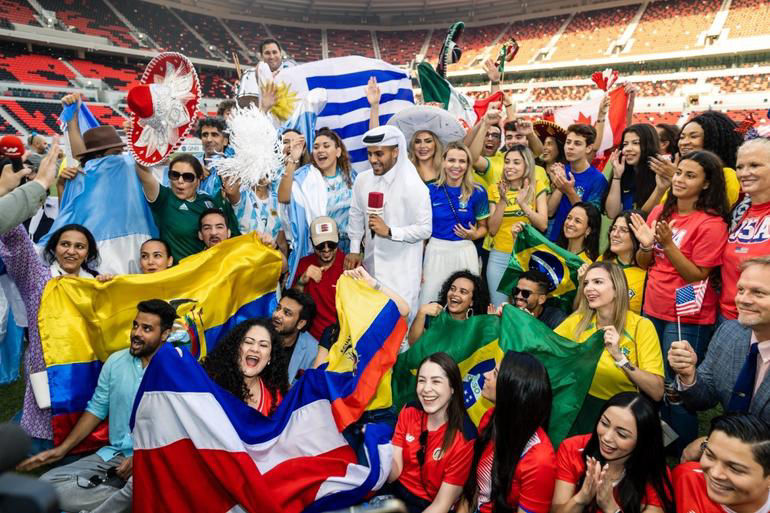
For a few remarkable weeks, people from every continent laughed together, danced together, shared meals together, traded jerseys together, and reminded one another that despite our differences, we have far more in common than we often realize.
Maybe that is what the World Cup has always been about. Not just discovering the best football team in the world.
But reminding us that we all share the same world.


Comments